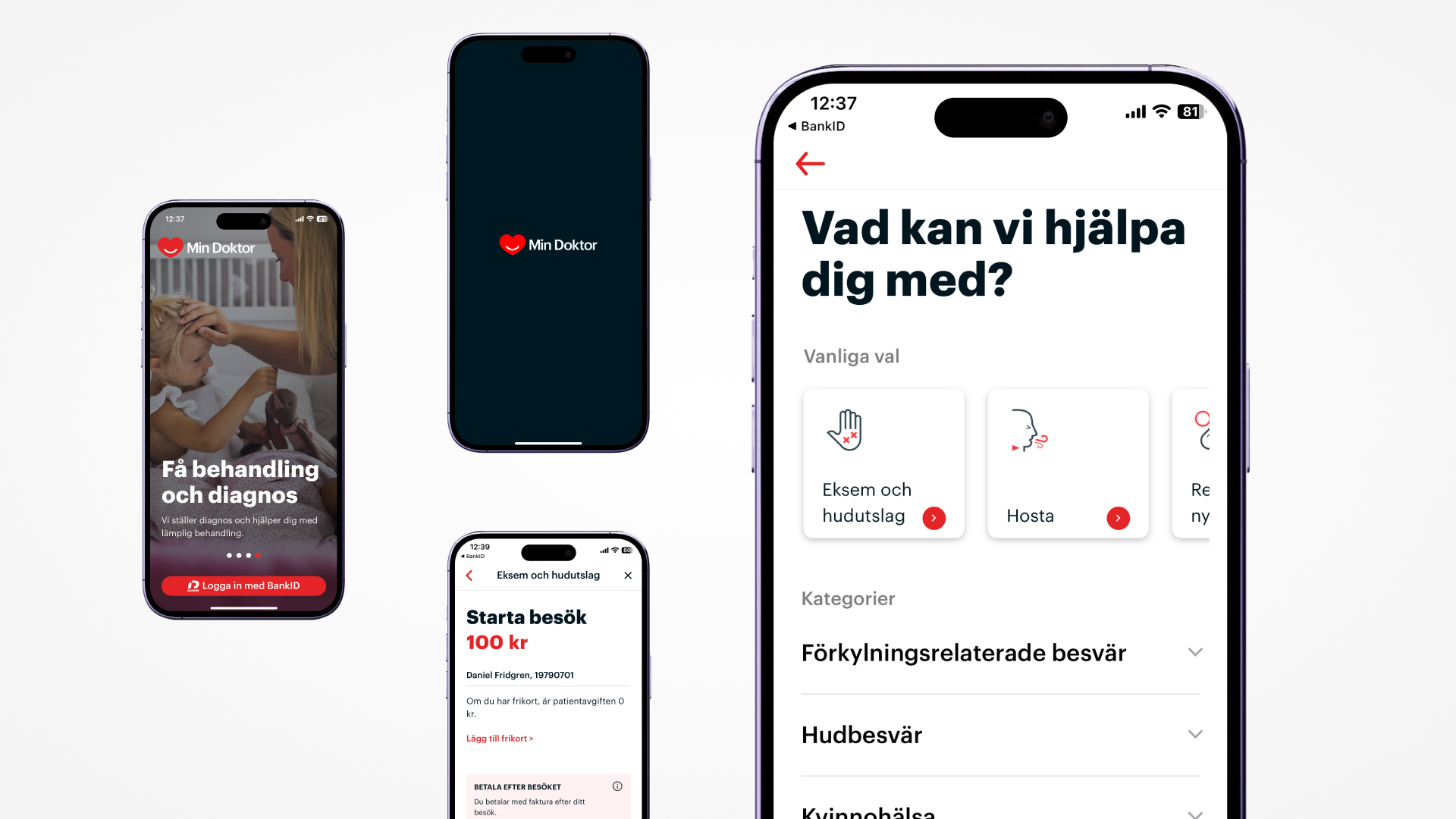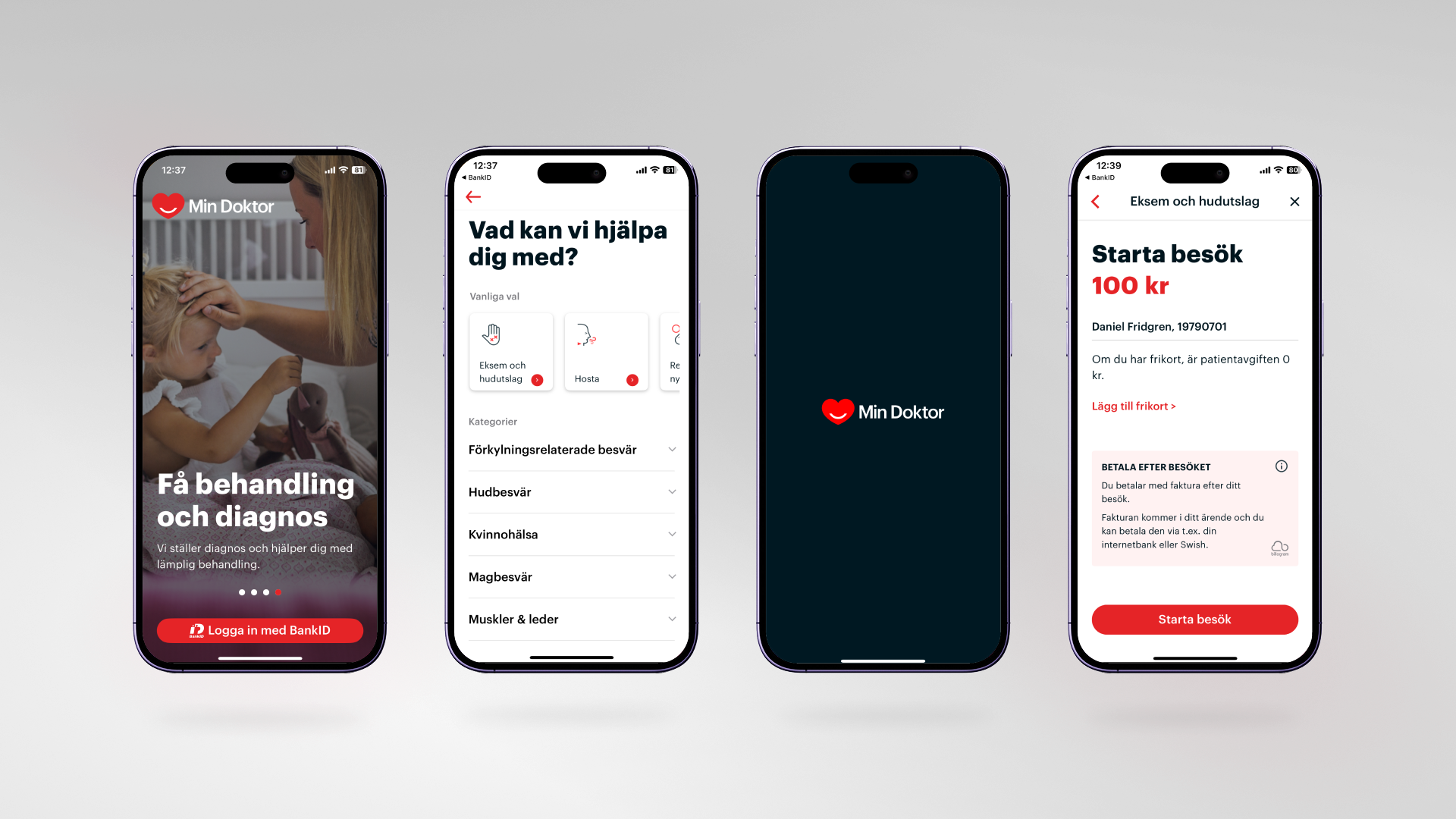
I joined Min Doktor to help refine the core experience across both patient and caregiver touchpoints. The work centered on translating clinical intent into clear, safe user flows: triage, consultation, follow-up, while navigating tight regulatory constraints and the very practical realities of patient behaviour. Much of the challenge was about creating clarity in moments where users are stressed, uncertain, or making decisions with medical consequences, and ensuring the interface supported the underlying clinical protocols.
One highlight was a research initiative that followed Min Doktor’s acquisition of Minutkliniken. I discovered that nurses were frequently becoming a bottleneck in the patient flow. By analysing their workload, we identified opportunities to gather essential information before the consultation. One solution was a self-check-in kiosk for use in the clinic, enabling patients to confirm their visit and update their details on arrival. Another was encouraging patients to fill out forms and provide relevant medical history in the app ahead of time, which reduced the administrative load on nurses.
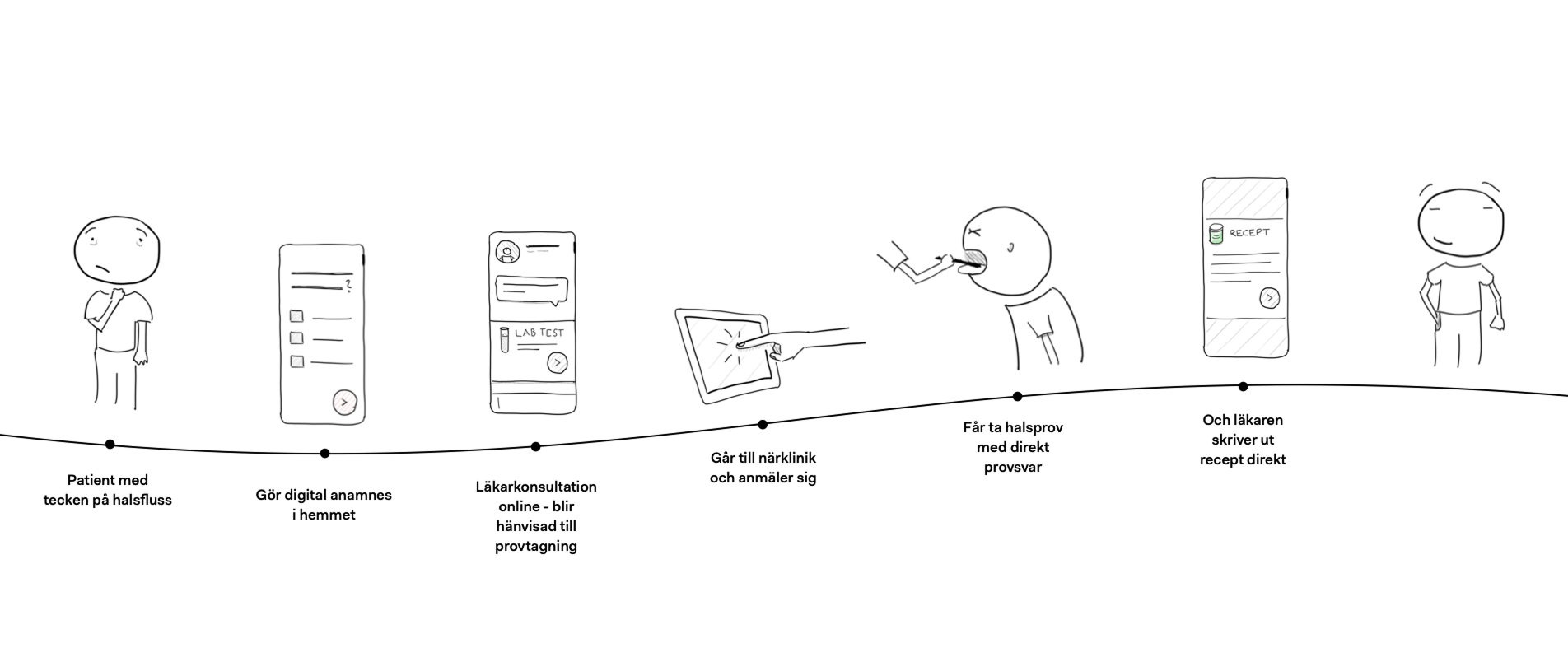
Working in this space meant constantly balancing precision with usability: interpreting clinical guidelines, understanding operational routines, and shaping interactions that met strict compliance requirements without becoming rigid or opaque. It required close collaboration with clinicians, product managers, and engineers to ensure that the experience was not just functional, but trustworthy and scalable across different care pathways.
All in all, the role deepened my grasp of healthcare’s structural complexity, including the interplay between providers, patients, legislation, and economic incentives. It revealed how design decisions sit within a dense ecosystem of clinical safety, reimbursement models, and organisational workflow.